Implementing Azure Landing Zones
A production Azure foundation — eight design areas, deployed as code, ready for workloads from day one.
What this is
An Azure landing zone is the prepared ground that everything else gets built on. Without one, every new application team builds its own subscription, its own network, its own identity model. They all do it slightly differently. A year later, your security team can't audit anything cleanly and your cost team can't allocate anything cleanly.
Microsoft published a reference for this — the Enterprise-Scale landing zone — built from helping organizations actually do this at scale. It covers eight design areas — billing and tenant, identity, management groups, networking, security, management, governance, and platform automation — and a way to assemble them that holds up over years.
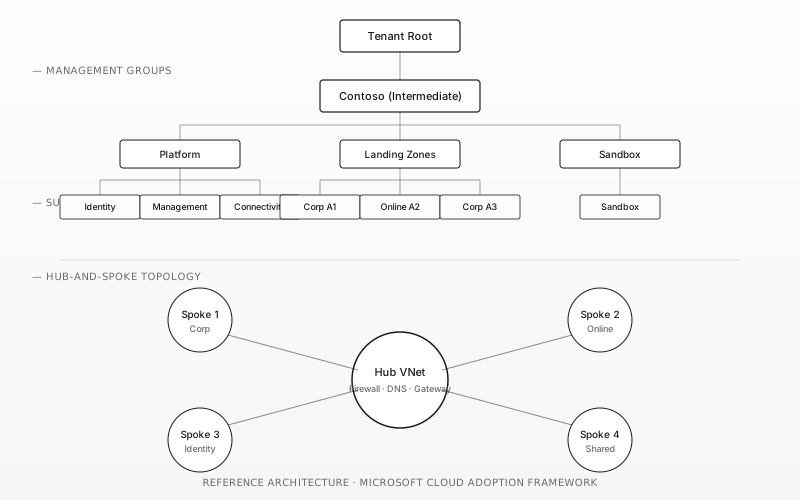
We use Microsoft's reference. We don't invent our own architecture. The reference isn't perfect, but it's been refined by far more migrations than we've personally done, and the value is in the consistency, not the novelty.
What you'll get
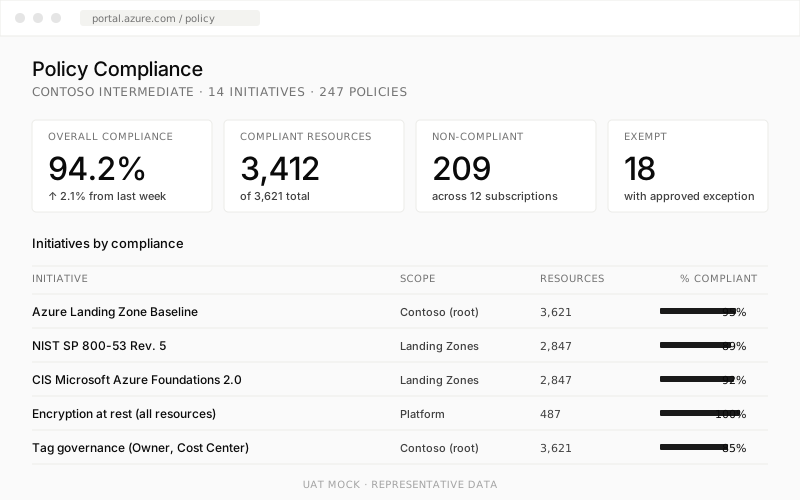
A deployed Azure environment with all eight design areas configured — management group hierarchy, hub-and-spoke or Virtual WAN network, Azure Policy initiatives enforcing your standards, Defender for Cloud and Sentinel running tenant-wide.
Everything as code. Bicep or Terraform via Azure Verified Modules, sitting in a Git repository that belongs to you. From this point forward, changes go through Pull Requests reviewed by your team, not by clicking around in the portal.
Architecture Decision Records explaining why each choice was made — so someone joining your team in two years can understand why things are the way they are, and decide whether to change them. And a clear template for application teams to use when they need a new landing zone, so deploying a new app takes hours, not weeks.
How it goes
Weeks 1–4. We work through each design area with your platform and security teams. Most decisions have a Microsoft-recommended default. Some need to be tailored — for your regulatory environment, your existing on-premises systems, the team that will inherit operations. Every decision becomes an Architecture Decision Record. By the end, the architecture is documented and agreed.
Weeks 5–10. We use Azure Verified Modules through the ALZ IaC Accelerator. Management groups, policies, networks, monitoring, automation — all in code, all in your Git repository. We do the first deployments. Your team observes the first few, then starts driving them by week eight or nine.
Weeks 11–14. We deploy one or two application landing zones with workloads your teams actually need. This is where you find out which policies are too strict, which monitoring rules are too noisy, which decisions from the Design phase need adjusting. We tune, then open it up.
Weeks 15–16. We pair with your platform team on the first real changes — Pull Requests they write, with us reviewing rather than driving. After handover, we stay reachable for 30 days of hypercare for anything that comes up.
Practical details
If you want to talk through your situation — Azure you've already built, the team that will inherit it, what you've tried before — write to us.
We usually reply the same day.